

In the rapidly evolving world of digital retail, your ecommerce storefront is more than just a website; it is the heart of your brand. It is the global flagship that never sleeps, the primary touchpoint for millions of potential customers, and the engine that powers your revenue.
In additiom, for modern businesses, the distinction between “online” and “offline” is blurring. Customers expect a seamless experience whether they are browsing on a smartphone on the train, visiting a brick and mortar location, or shopping via social media. To succeed in this competitive landscape, your online store must be a masterclass in user experience, technical performance, and brand storytelling.
This comprehensive guide explores the anatomy of a world-class ecommerce storefront. We will dissect the key features that drive conversion, compare custom builds against ecommerce website builder tools, and reveal how to turn casual browsers into loyal, lifetime customers.
1. Defining the Modern Ecommerce Storefront
At its core, an ecommerce storefront is the customer-facing side of your online business. It is where visitors browse your catalogue, interact with your brand, and ultimately decide to sell products to themselves by clicking “buy.”
However, in 2026, a storefront is not just a digital catalogue. It is an ecosystem.
- It is a Content Hub: Educating users through blogs, guides, and lookbooks.
- It is a Service Centre: Providing instant customer service through AI chatbots and live support.
- It is a Data Engine: Capturing customer data to fuel personalised marketing.
The Shift from “Website” to “Experience”
Ten years ago, having a functional shopping cart was enough. Today, consumer expectations are sky-high. If your ecommerce store takes more than three seconds to load, you lose 40% of your traffic. If your navigation is clunky, users bounce to Amazon.
The modern storefront must be “headless.” This means the front end (what the customer sees) is decoupled from the back end (where the data lives). This allows for lightning-fast speeds and the ability to push content to any device smartwatches, voice assistants, and even in-store kiosks without rebuilding the core system.
2. Choosing Your Foundation: Ecommerce Platform vs. Custom Build
One of the first decisions you will face is choosing the technology stack. This usually boils down to two paths: using an all-in-one ecommerce website builder or investing in a custom ecommerce solution.
The Case for Website Builders (SaaS)
Platforms like Shopify, BigCommerce, or Wix are popular for a reason. They offer a “store in a box.”
- Built-in Tools: These platforms come with hosting, security, and basic design themes included. They handle the technical maintenance, allowing you to focus on marketing.
- Speed to Market: You can technically launch a store in a weekend.
- Limitations: You are often locked into their ecosystem. You pay monthly fees for apps to add basic functionality, and you have limited control over the checkout code.
The Case for Custom Ecommerce Solutions
For serious brands scaling beyond the startup phase, a custom storefront is often the better investment.
- Total Ownership: You own the code and the customer data. You are not renting your house; you own it.
- Unlimited Flexibility: Do you need a bespoke “Build Your Own Bundle” tool? Or a complex B2B portal with tiered pricing? A custom build can handle unique requirements that a template cannot.
- Performance: Custom sites are lean. We don’t load 50 unnecessary scripts “just in case.” We build exactly what you need, resulting in faster load times and better SEO rankings.
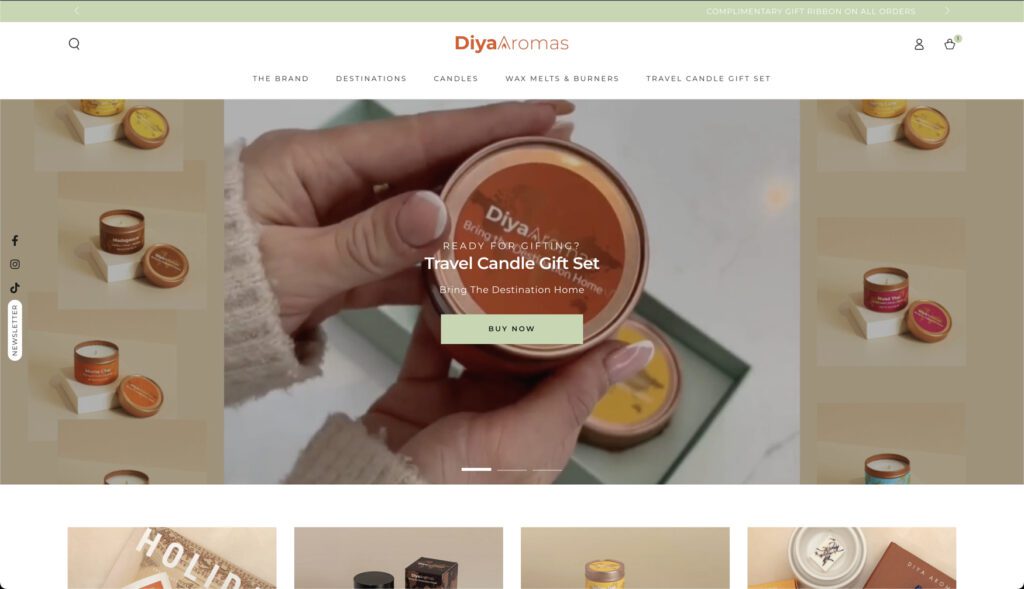
3. Visual Merchandising: The Art of Digital Seduction
In a physical store, customers can touch the fabric, smell the leather, and try on the fit. Online shopping removes these sensory inputs. Your storefront must compensate for this sensory deficit through visual excellence.
High Quality Images are Non-Negotiable
Your product photography is your salesperson. If your images are blurry, dark, or small, visitors assume your product is low quality.
- Multiple Angles: Show the front, back, side, and close-ups of textures.
- In-Context Shots: Don’t just show a sofa on a white background; show it in a living room. Help the customer visualise the item in their life.
- 360-Degree Views: Allow users to spin the product. This interactivity increases engagement and reduces return rates by setting accurate expectations.
- Video: Video converts. A 10-second clip of a model walking in a dress or a gadget being used conveys more information than ten static photos.
Persuasive Product Descriptions
Never copy-paste the manufacturer’s description. That is the quickest way to kill your SEO and bore your customers.
- Sell the Benefit, Not the Feature: Don’t just say “2000mAh battery.” Say “All-day battery life that keeps you connected from morning coffee to evening commute.”
- Answer Objections: Use the description to pre-emptively answer questions. “Is it machine washable?” “Does it fit true to size?”
- Formatting: Use bullet points and bold text. Most users scan; they don’t read.
4. The Transaction Engine: Payments and Checkout
The checkout is the most critical moment in the journey. It is where “interest” becomes “revenue.” Yet, nearly 70% of shopping carts are abandoned. Optimising your payment process is the single most effective way to increase profits.
Frictionless Payment Options
You must offer the customer their preferred way to pay. If they have to get up to find their wallet, you have lost them.
- Digital Wallets: Apple Pay, Google Pay, and PayPal allow for one-touch checkout. This is crucial for mobile users.
- Buy Now, Pay Later (BNPL): Services like Klarna or Clearpay can increase Average Order Value (AOV) by allowing customers to spread the cost.
- Credit Cards: A standard, but essential requirement.
The Role of the Payment Gateway
The payment gateway is the secure tunnel that transmits credit card information from the customer to the bank.
- Security: Your gateway must be PCI-DSS compliant. Displaying security badges (like “Verified by Visa” or “SSL Encrypted”) in the checkout footer increases trust.
- Seamless Integration: The best gateways keep the user on your site. Redirecting them to a third-party page (like an old PayPal screen) breaks the immersion and lowers trust.
Optimising the Cart
Your shopping cart page should be more than a list of items. It is a strategic tool.
- Guest Checkout: Never force a user to create an account before buying. Let them buy first, then offer account creation on the “Thank You” page.
- Cost Transparency: Show shipping costs and taxes early. Surprise fees at the final step are the #1 reason for cart abandonment.
5. Data-Driven Personalisation
The days of “one size fits all” are over. The best ecommerce platforms use data to curate a unique experience for every visitor.
Intelligent Product Recommendations
“Customers who bought this also bought…” is just the beginning.
- Dynamic Upselling: If a customer adds a camera to their cart, instantly recommend the compatible memory card and carry case.
- Personalised Homepages: If a user has previously bought men’s running shoes, don’t show them high heels when they return. Show them the latest running apparel.
- Recently Viewed: Make it easy for users to find items they looked at yesterday.
Leveraging Customer Data
Every interaction on your store generates data.
- Purchase History: Use this to send timely replenishment emails (“Time to restock your vitamins?”).
- Browsing Behaviour: If a user spent 10 minutes looking at winter coats but didn’t buy, retarget them on social media with a discount for winter coats.
- Zero-Party Data: Ask customers what they want. A simple quiz (“What is your skin type?”) allows you to filter the entire store to show only relevant products, drastically increasing conversion rates.

6. Omnichannel: Bridging the Gap
Your ecommerce storefront does not exist in a vacuum. It must connect with every other channel where your brand lives.
Brick and Mortar Integration
If you have physical stores, your online store should act as a digital bridge.
- Click and Collect (BOPIS): Allow users to buy online and pick up in-store. This saves shipping costs and drives foot traffic.
- Live Inventory: Your website should show stock levels at local stores. “Available for pickup at London Oxford Street today.”
- Endless Aisle: Equip store staff with tablets. If a size is out of stock in the shop, they can order it from the online store for the customer right there.
Social Media Commerce
Social media is no longer just for brand awareness; it is a transaction channel.
- Shoppable Feeds: Connect your product catalogue to Instagram and TikTok. Users can tap a photo in their feed and purchase the item without leaving the app.
- User-Generated Content: Pull photos of real customers using your products from Instagram and display them on your product pages. This “social proof” is often more persuasive than professional marketing images.
7. Trust, Support, and Service
In a digital environment, trust is the currency of trade. Since customers cannot look you in the eye, your storefront must convey reliability.
Customer Service Integration
Support shouldn’t be hidden in a footer link.
- Live Chat: A chat widget allows users to ask quick questions (“Do you ship to France?”) without leaving the page.
- AI Chatbots: These can handle 80% of routine queries (tracking orders, returns policy) instantly, 24/7.
- Self-Service Portals: Allow customers to print their own return labels and track shipments without needing to email you.
Social Proof and Reviews
Reviews are critical. A product with 4.5 stars and 50 reviews is infinitely more sellable than a product with zero reviews.
- Automated Requests: Set up emails to go out 7 days after delivery asking for a review.
- Incentivised Reviews: Offer a small discount on their next order in exchange for a photo review.
8. Key Features of a High-Performance Storefront
To summarise, a world-class ecommerce solution must include these non-negotiable elements:
- Mobile Responsiveness: 70% of traffic is mobile. The site must work perfectly on a thumb-scrolled screen.
- Fast Search: An intelligent search bar that predicts what the user is typing and handles spelling errors (e.g., showing results for “iPhone” even if they type “ifone”).
- Security: SSL certificates, secure payment gateways, and GDPR compliance to protect customer data.
- SEO Architecture: Clean URLs, fast load times, and proper meta tags to ensure Google ranks your store.
- Scalability: The ability to handle traffic spikes on Black Friday without crashing.
Conclusion: Building for the Future
Creating a successful ecommerce storefront is a journey, not a destination. It requires a constant cycle of testing, learning, and optimising. It requires balancing beautiful high quality images with fast load times. It requires balancing robust customer data collection with privacy and trust.
Whether you choose a simple ecommerce website builder or a bespoke, enterprise-grade build, the principles remain the same. Put the customer first. Remove friction. Build trust.
Your storefront is your stage. It is time to put on a show that turns the world into your customer.
Ready to upgrade your digital presence? If you are looking to launch or redesign your store, focus on the fundamentals outlined in this guide. A robust, customer-centric storefront is the best investment you can make in the future of your business. Contact Bluewing Digital now